
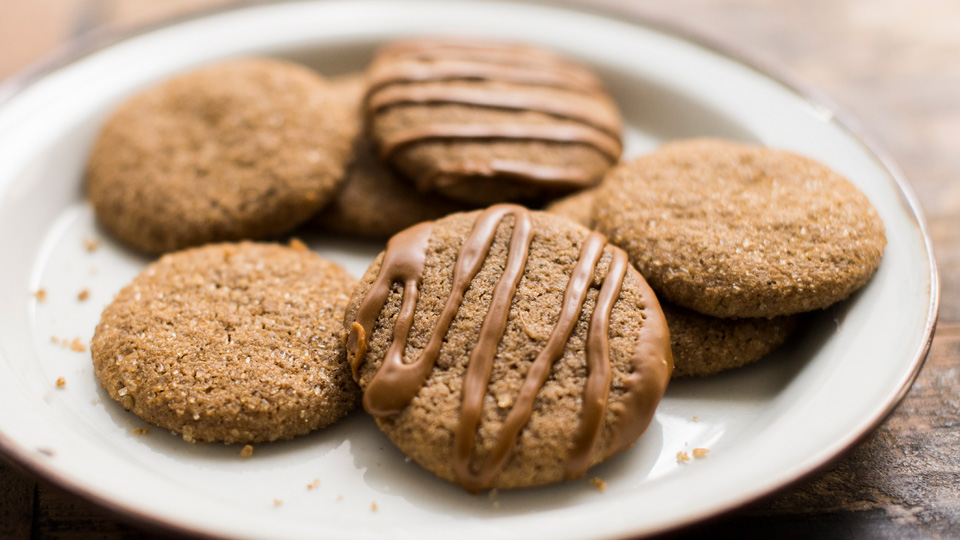
Polish Gingerbread Cookies with Honey and Rye
From Christopher Kimball's Milk Street Television. Pierniki, Poland’s honey-based gingerbread cookie, is heavily spiced. To replicate that and get the most flavor from our spices, we infuse them into the honey. This both draws out their flavors and distributes them more evenly through the cookies. A dark, robust honey stands up nicely to the intensity of the spices and the nuttiness of the rye flour. Our favorite is buckwheat honey, which has notes of molasses. Clover honey works well, too, but avoid honeys with a distinct floral sweetness, such as orange blossom and wildflower. Makes approx. 40 cookies.
Recipe Ingredients
- For the cookies:
- - 251 grams (0.75 cup) buckwheat or clover honey
- - 113 grams (8 tablespoons) salted butter, cut into 6 to 8 pieces
- - 1.25 teaspoons ground black pepper
- - 1 teaspoon ground cinnamon
- - 1 tablespoon ground ginger
- - 0.5 teaspoon ground cardamom
- - 210 grams (1.5 cups) rye flour
- - 195 grams (1.5 cups) all-purpose flour
- - 0.5 teaspoon baking soda
- - 1 tablespoon finely grated fresh ginger
- - 109 grams (0.5 cup) packed light brown sugar
- - 0.25 teaspoon table salt
- - 1 large egg
- - 198 grams (1 cup) turbinado sugar (if not using espresso glaze, see notes)
- For the espresso glaze:
- - 2 tablespoons instant espresso powder
- - 3 tablespoons plus 1 teaspoon whole milk
- - 248 grams (2 cups) powdered sugar
Recipe Instructions
For the cookies:
- In a small saucepan over medium, combine the honey, butter, pepper, cinnamon, ground ginger and cardamom. Bring to a simmer, stirring occasionally, then transfer to a medium bowl. Let cool until warm, 20 to 30 minutes. Meanwhile, in a medium bowl, whisk together both flours and the baking soda.
- Into the cooled honey mixture, stir the fresh ginger, brown sugar and salt. Add the egg and whisk until well combined. Add the flour mixture and stir until no dry patches remain and the dough is well combined. Shape the dough into a disk, wrap in plastic wrap and refrigerate until firm, at least 2 hours or up to 12 hours.
- Heat the oven to 350°F with the racks in the upper- and lower-middle positions. Line 2 rimmed baking sheets with kitchen parchment. Put the turbinado sugar, if using, in a small bowl.
- Pinch off 1-tablespoon bits from the chilled dough disk and roll them between the palms of your hands into 1-inch balls. If using turbinado sugar, roll each ball in the sugar to coat evenly. Divide the dough balls between the prepared baking sheets, spacing them evenly. Lightly press each one with your hand to flatten to a quarter-inch thickness.
- Bake until the cookies are light golden brown at the edges and slightly cracked on top, 10 to 12 minutes, switching and rotating the baking sheets halfway through. Cool on the baking sheets for about 5 minutes. Using a wide metal spatula, transfer the cookies to a wire rack and cool completely.
For espresso glaze:
- In a medium bowl, combine 2 tablespoons instant espresso powder and 3 tablespoons plus 1 teaspoon whole milk
- Whisk until the espresso dissolves.
- Add 248 grams (2 cups) powdered sugar; whisk until the glaze is thick and smooth.
- Use a spoon to drizzle the glaze over the cooled cookies. Let the glaze dry for about 30 minutes.
Notes:
- Don’t chill the cookie dough for longer than 12 hours or the cookies will bake up cakey and thick.
- Traditional pierniki dough is aged for days or even weeks, but we opted to chill the dough for only two hours or up to overnight; if time allows, bake the cookies the day before serving, as their flavor improves with resting.
- These can be decorated in a couple different ways. Rolling the dough balls in turbinado sugar before baking creates a pretty, crackled appearance. Alternatively, you can drizzle the baked and cooled cookies with an espresso glaze that pairs well with the spices.